Black Box or Found Space? Reading Two Performance Settings
Black box or found space? Compare seating, sightlines and surroundings to choose a performance setting that suits how you want to watch and listen.
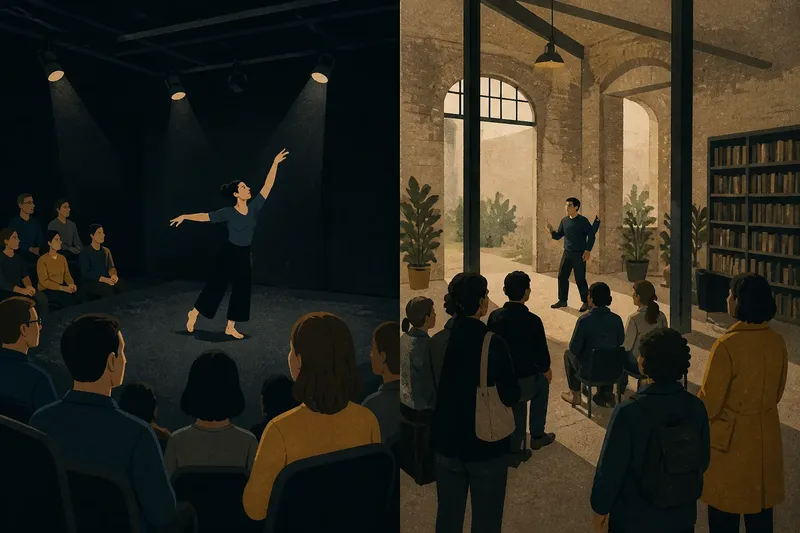
Should you choose a black box or a found space for a performance? A black box or found space can shape what you notice before the performers say a word: the stage, the audience, or the character of the room itself.
Start with attention
A black-box room is a flexible performance space, often with dark surfaces and adaptable seating or staging. A found space is a place used for performance that was not designed primarily as a theatre: perhaps a library, warehouse, courtyard, shopfront or community hall. The label tells you something about the room, but not everything. A found space can be carefully staged, while a black box can feel close and informal.
Ask yourself what you want the setting to do. A black box may suit you if you want to focus on the performers. A found space may appeal if you enjoy noticing how an event changes the meaning of an everyday place. Neither setting is automatically more intimate or immersive; those qualities depend on the layout, the work and the relationship between performers and audience.
Choose the room that directs your attention where you want it to go.
Choose a black box
A black box tends to reduce visual competition. Dark walls, controlled lighting and a clear playing area can help direct attention towards gestures, movement and sound. The room can often be rearranged: performers might be placed in the centre, along one wall or among the seats. The audience arrangement becomes part of the event, not just a backdrop.
This setting may suit you if you want to follow a composed performance without the room’s ordinary activity competing for attention. It can also appeal if you value a clear view and a defined performance area. But dark walls do not ensure an unobstructed sightline. A tall spectator, pillar or unusual stage arrangement can still limit what you see.
If movement matters, check whether seating is tiered, flat or arranged around the action. On a flat floor, a seat near the front may feel close but offer a less complete view of movement across the space. A raised seat farther back may make the overall arrangement easier to read. Check the venue’s seating plan or ask staff about access and sightlines if you have a particular need.
Pick the black box when concentration and a deliberately shaped stage matter most to you.
Choose a found space
A non-theatre setting brings its existing character into the experience. A performance in a library may sit alongside shelves, doorways and the hush expected of the room. In a courtyard, changing light, weather and distant sounds may be part of what you notice. These surroundings can add texture, but they can also draw attention away from the performers.
Choose a found space if you are curious about the relationship between the work and its location. The room may make an ordinary action feel newly visible or let the audience encounter the performance from an unfamiliar angle. It may suit you less if you need a consistently clear view, quiet conditions or a predictable seat. Narrow passages, hard surfaces and objects in the room can affect movement, sound or sightlines.
Check the event information for the audience arrangement and notes about access, seating or standing. “Found space” does not tell you whether the performance is indoors, outdoors, seated or free-roaming. If the format is unclear, contact the organiser before travelling, especially if you need step-free access or a place to sit.
Choose the found space when the surroundings are part of what you want to experience.
Read the audience layout
The arrangement of spectators can matter as much as the building. In a front-facing layout, most people look in one direction. This can make the action easier to follow, though people at the edges may see it from an angle. A performance surrounded by spectators offers several viewpoints, but one person may sometimes block another’s view.
In promenade or roaming formats, the audience may move between locations. That can reveal details a fixed seat would hide, but it asks you to keep track of the action and find a place to stand comfortably. An intimate arrangement can make expressions and small gestures easier to see; it can also bring performers close in a way that not every visitor enjoys.
Say you are choosing between a seated performance in a community hall and a roaming piece in its adjoining courtyard. You prefer to remain seated and follow the whole event from one place. You check the organiser’s description and see that the hall has seating, while the courtyard piece asks the audience to follow performers. The hall better matches your stated preference; the courtyard may suit you if moving with the action and noticing the outdoor setting matter more. The deciding detail is what the audience is asked to do, not the venue’s label.
Questions about the setting?
Where will the audience sit?
Look for a seating plan or terms such as end-on, in the round or promenade. If the arrangement is not stated, ask the organiser whether seating is assigned, flexible or unavailable.
Could the room affect what I hear?
Hard walls, open doors and nearby activity can change how sound reaches the audience. If speech is central to the performance, check whether the organiser mentions amplification or a quieter seating area.
Can I see the action from my seat?
A venue may describe sightlines or note restricted-view seats, but the stage arrangement can vary by event. Ask about likely obstructions if a clear view matters to you.
Will I need to move during the performance?
Some events ask spectators to follow performers or change rooms, while others keep the audience in one place. Check the event description so you can choose a format that works for your comfort and access needs.
Compare the practical details
Use these checks to decide whether the event fits the way you want to watch. For each observation, follow the matching choice; if the information is missing, contact the organiser rather than guessing.
- Check whether the event is seated or standing. If a seat is available and you want to remain seated, choose an event with confirmed seating; if it is standing-only, ask about seating options or choose another event.
- Check the seating plan for a front-facing, in-the-round or roaming layout. If you want one steady view, choose a fixed arrangement; if you want to move with the action, consider a roaming format.
- Check for tiered seating, pillars or restricted-view notices. If the listed arrangement may block your view, ask about another seat or choose an event with a clearer sightline.
- Check whether the performance is indoors or outdoors. If weather or outdoor sound would distract you, choose an indoor event; if the surroundings are part of the appeal, the outdoor setting may fit.
- Check the access information for steps, narrow passages and step-free routes. If the route does not meet your needs, ask the organiser about an alternative entrance or choose a suitable venue.
- Check whether the event asks the audience to change rooms or follow performers. If moving is comfortable for you, the format may suit; if not, ask about a stationary option or select a seated performance.
Say you want to attend a performance and have these hypothetical details: the black-box event lists flat seating and a pillar near one side; the courtyard event is outdoors and asks spectators to follow the performers; you prefer to stay seated and want a clear view. First, compare the seating: the black box offers seats, but its plan leaves the pillar as a possible obstruction, so ask the organiser which seats avoid it. Next, check the courtyard format: it requires movement, which conflicts with your preference. If the organiser confirms a clear black-box seat, that event better fits your stated needs; if not, ask about another seating arrangement or look for a seated event with clearer sightlines. This decision follows from the stated preferences and event details, not from a claim that one type of space is better.
Choose by experience
A black box may fit when you want a contained visual field, a stable audience position and a focus on performance. A found space may fit when you want the building, street or room to remain visible as part of the experience. Compare the audience layout and access information before choosing by venue type alone.
For black box or found space, ask where your attention will go once the performance begins. Check the seating, sightlines and relationship to the surroundings, then choose the setting that supports the way you want to watch. The event description can also tell you what to bring: perhaps a layer for an outdoor courtyard, or enough time to ask staff about a seat before the performance starts.